

Post-Acne Marks
Do you notice flat red, pink, or brown marks left behind after a pimple has healed? Do they linger for weeks, months, or even longer? Post-acne marks are very common, and they aren’t a sign that you did something wrong. Even when you’ve stopped picking and tried the products, they can take far longer to fade than the pimple itself did.
Post-acne marks are the skin's response to inflammation, but not all of them are the same. Some are red or pink, caused by blood vessels, and others are brown, caused by excess pigment. Many people have a mix of both. Because they respond to different treatments, the first step is working out which type you have.
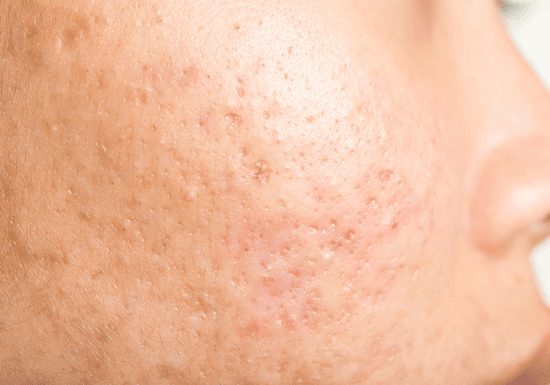

What are post-acne marks?
Post-acne marks are flat, discolored spots that stay on the skin after acne has healed. They're different from acne scars, which affect the texture of the skin, leaving it indented or raised. Marks are a change in color (not texture), and they usually fade over time. How long that takes varies a lot from person to person.
Types of post-acne marks
There are two main types of post-acne marks, depending on what's causing the color:
- Post-inflammatory erythema (PIE): flat red, pink, or purple marks. They're caused by damage to, or widening of, the tiny blood vessels in the skin surface after inflammation, not by pigment. PIE can appear on any skin tone, and tends to be more noticeable on lighter ones.
- Post-inflammatory hyperpigmentation (PIH): flat tan, brown, or dark brown marks. Inflammation prompts the pigment-producing cells to release more melanin, which stays in the skin even though the pimple has healed. All skin types can get PIH, but it's more common in medium to deeper skin tones, including many Asian skin tones.
Many people have both, with red-brown or purplish-brown marks, especially after deep, inflamed breakouts. Since the cause is different, treatment varies too. And in many cases, what works for brown marks often does little for red ones.
What causes or contributes to post-acne marks?
- Acne severity: deeper, more inflamed breakouts, such as cystic or nodular acne, are more likely to leave marks. The more intense the inflammation, the larger and more noticeable the post-acne mark tends to be.
- Delayed treatment of active acne: breakouts that linger or stay on the skin for a long time keep creating new marks.
- Harsh skincare or treatments: scrubs, incorrect use of peels, or aggressive lasers can irritate the skin and add to PIH.
- Picking, squeezing, and popping: doing any of these creates more inflammation and prolongs healing, making the marks darker and longer-lasting.
- Skin tone: PIH is more common in medium to deeper skin tones, while PIE tends to be more visible on lighter skin tones.
- Sun exposure: while the sun doesn't cause marks, it can darken them and prolong their fading process. In Singapore, UV exposure is year-round.
How to tell if it's worth getting looked at
Ask yourself:
- Is the mark flat? Raised or indented marks are more likely acne scars, which are a different concern than acne marks.
- Does the mark fade or turn pale when you press it gently with a fingertip or a clear glass, then return when you let go? That usually points to PIE.
- Does it stay brown or dark when pressed? That usually points to PIH.
- Has it been there for several months?
- Are you still getting new breakouts?
A doctor can confirm which type you have, which matters because the treatments differ. If you're still breaking out, it's worth raising that too, since active acne is part of the plan.
What Can Help
At Cutis Medical Laser Clinics, we start by working out whether your marks are red, brown, or both, because what works for one often does little for the other. We also look at whether you still have active acne, since new breakouts keep creating new marks.
Medical (doctor-led)
- Hydroquinone: a skin lightening agent that blocks tyrosinase to reduce melanin production. It targets brown marks (PIH), not red ones, and is typically used for a set period under a doctor's supervision, since prolonged or unsupervised use can cause irritation or unwanted darkening. In Singapore, it is available by prescription only.
- Laser Vein Reduction: uses laser energy to target the tiny blood vessels behind persistent red or pink marks (PIE), helping reduce their redness. It addresses the vascular cause, so it isn't used for brown marks.
Skincare and lifestyle
- Apply a broad-spectrum sunscreen of SPF 30 or higher every day, including on cloudy days and indoors near windows, and reapply every two hours when you're outdoors. Sun can darken marks and prolong how long they take to fade.
- Don't pick, squeeze, or pop pimples. If extractions are needed, have them done by a professional.
- Cleanse gently, and avoid abrasive scrubs or layering several strong products at once.
- Treat active acne early, since new breakouts create new marks. Ask your doctor about a plan that suits your skin.
- Moisturize with a non-comedogenic product to support the skin barrier.
- Avoid DIY remedies such as lemon juice or toothpaste, which can irritate the skin and lead to more pigmentation.
- Avoid unregulated skin lightening creams, including those bought online or overseas, as they may contain undisclosed steroids or mercury and can harm your skin.
- Other topical treatments: such as azelaic acid, retinoids, vitamin C, and niacinamide may be recommended or prescribed to calm inflammation, support skin renewal, and help brown marks fade. Some also help control the acne that causes marks. Retinoids are not used during pregnancy.
- Pico Laser: uses ultra-short pulses of light, typically at gentle settings, to break pigment into smaller particles the body can clear more easily, which makes it suited to brown marks (PIH) that haven't responded well to topical treatments.
Lasers must be used cautiously and properly by a qualified professional, as improper settings or aggressive use can worsen pigmentation, particularly in medium to deeper skin tones.
Aesthetic (therapist-led)
- Chemical Peels: exfoliate the surface layers of the skin and encourage renewal, which can help even out brown marks and improve active acne. For marks, peels are typically chosen to be gentle, since aggressive peeling can irritate the skin and worsen pigmentation in medium to deeper skin tones.
- IPL Photo Facial: uses intense pulsed light to target pigment and redness, and can be used on the face, neck, and chest. Treated brown spots may darken at first, then flake off over about five to seven days. It must be used carefully in medium to deeper skin tones, as the wrong settings can worsen pigmentation.
What to Expect
Post-acne marks often fade on their own, but it can take months, and sometimes longer. The fading process depends on the type, how inflamed the pimple was, your skin tone, and how well you protect your skin from the sun. Marks that are further different from your natural skin tone usually take longer to fade.
- Treatment can speed the fading process, but the approach and timeline depend on whether your marks are red, brown, or both.
- Improvement is gradual, usually over a series of sessions or weeks of consistent topical use, and results vary from person to person.
- There are instances where marks may not clear completely.
Your doctor will go through the number of sessions, timeline, and downtime for your plan before you begin. In addition, active acne should be under control, or treated at the same time, so new marks don't keep forming. Daily sun protection is part of every plan.
When Treatment Isn't the Answer
Post-acne marks are harmless, and they often fade with time and sun protection alone. This is why for mild or recent marks, waiting is reasonable, particularly if the marks are close to your natural skin tone.
If you still have active acne, treating it first (or alongside) comes before treating the marks, since new breakouts keep creating new ones. If your skin is indented or raised rather than flat, that's more likely acne scarring, which is a different concern. And if a mark is changing, bleeding, or doesn't look like it came from a pimple, have a doctor check it.
Some treatments aren't suitable during pregnancy or breastfeeding, and light-based treatments may need to wait if your skin is tanned or irritated. Your doctor will assess this at your consultation.
FAQs
How long do post-acne marks take to fade?
It varies from person to person, from a few months to a year or more. Darker or more inflamed marks tend to take longer. Sun exposure can also darken them and slow fading.
What's the difference between PIE and PIH?
PIE is red, pink, or purple. It is due to tiny blood vessels near the skin's surface and usually fades when pressed. PIH is tan to dark brown and comes from excess pigment. It stays the same color when pressed. Many people have both, and they're treated differently.
Are post-acne marks the same as acne scars?
No. Marks are flat and only change the color of the skin. Scars change the texture, leaving it indented or raised, and they need different treatments.
Can I treat post-acne marks while I still have acne?
Yes, and it's usually best to treat both together, since new breakouts can keep creating new marks. Your doctor can plan this with you.
Do home remedies like lemon juice or toothpaste work?
Not safely. They can irritate the skin, and irritation can cause more pigmentation than you started with. A doctor can recommend something that suits your skin.
Do I need sunscreen every day?
Yes. Sun can darken post-acne marks and slow their fading process, and UV levels in Singapore stay high all year. A broad-spectrum sunscreen of SPF 30 or higher is recommended daily.
The information on this page is intended for educational purposes and does not replace a proper diagnosis. Every case is different, so the right next step is a consultation with our medical team.
Related Pigmentation Concerns
Ready to find out what's behind your pigmentation concern?
Book a personalized consultation with us to talk through what you're noticing and explore pigmentation treatment options that suit your skin and your goals. WhatsApp us at +65 9780 2079 to book a consultation at Cutis Medical Laser Clinics in Singapore.

