

Cellulite and Stretch Marks
Do you have dimpled skin on your thighs (cellulite) that shows up in certain lighting? Or stretch marks across your belly or hips that you notice more in swimwear or fitted clothes? Neither is a serious health problem, but both can make you self-conscious. And despite what many products promise, neither has a cure.
Both are common. Stretch marks affect about 50% to 90% of people, and cellulite can affect people of any size, including those who are skinny. They're more common in women, but men can have them too.
Cellulite and stretch marks are different concerns. Cellulite changes the contour of the skin, making it look lumpy or dimpled. Stretch marks, on the other hand, affect the surface, appearing as lines or streaks. Some people have one, while others have both, which is why the first step is working out which you're dealing with.

What are cellulite and stretch marks?
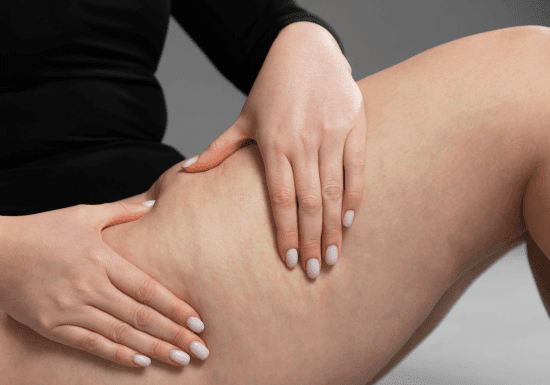
Cellulite: also called orange-peel or cottage cheese skin, cellulite makes the skin look dimpled and lumpy. It often appears on the thighs, hips, and buttocks. Cellulite’s exact cause isn't known, but it's thought to develop when the layer of fat beneath the skin pushes up through the collagen fibers and connective tissue.
It's graded from 0 to 3, based on when the dimpling shows:
- Grade 0: no visible dimpling whether you're standing, lying down, or pinching the skin.
- Grade 1 (mild): the skin looks smooth at rest, standing or lying down. Slight or mild dimpling appears only when you pinch the skin or tense the muscle underneath.
- Grade 2 (moderate): dimpling shows when you stand, then smooths out once you lie down.
- Grade 3 (severe): the skin looks uneven in every position, with deeper peaks and valleys that don't smooth out when you lie down.
Stretch marks: medically known as striae, these are a type of scar that forms when the skin is pulled by rapid stretching, causing collagen and elastin fibers to break. They appear as lines or streaks that can be slightly raised, indented, or itchy.
Stretch marks tend to appear where fat is usually stored, such as the abdomen, hips, thighs, upper arms, breasts, and lower back. Their color and feel change as they age, and they can look different depending on skin tone:
- Early stage, pink to purple (striae rubrae): newer marks that look pink, red, reddish-brown, or purple. This is because the blood vessels in the skin layer beneath the surface are still visible. Mild inflammation can make them feel slightly raised or itchy.
- Mature stage, white or silvery (striae albae): older marks that have faded to pale, silvery, or lighter than the surrounding skin. The blood vessels have narrowed, and the skin has formed firmer, scar-like tissue, so the marks sit flat or slightly indented.
- Bluish-purple (striae caerulea): a darker early-stage variation, which can relate to skin tone or how deep the blood vessels sit.
- Dark brown to black (striae nigra): very dark marks seen more often in deeper skin tones. This is where the pigment-producing cells are more active while the skin is first stretching.
What causes or contributes to cellulite?
- Age: skin becomes thinner and less elastic over time, which can make cellulite more noticeable.
- Being female: cellulite is much more common in women.
- Body composition: a higher body fat percentage with less muscle mass can contribute to skin dimpling, despite the weight being in the normal range.
- Genetics: cellulite tends to run in families.
- Hormonal changes: shifts in hormone levels can lead to fluid retention and weight gain.
- Inactivity or being sedentary: long periods of sitting can affect circulation, which may contribute to cellulite.
- Lifestyle habits: smoking, a poor diet, yo-yo dieting, tight clothing, and too much sun can make cellulite more noticeable.
What causes or contributes to stretch marks?
- Genetics: a family history of stretch marks increases your likelihood of developing them.
- Growth spurts: rapid growth during puberty can stretch the skin.
- Long-term use of corticosteroids: can lower the skin's collagen levels and weaken the connective tissues.
- Medical conditions: Cushing's disease and Marfan syndrome, among other conditions, can make the skin thinner and less elastic.
- Pregnancy: the skin stretches to make room for the baby, and having a large baby or twins can add to the risk of developing stretch marks.
- Rapid muscle growth: building muscle quickly can tear the skin's middle layer.
- Rapid weight change: gaining or losing weight quickly pulls the skin faster than it can adapt.
How to tell which you have
Ask yourself:
- Do you have dimpled or lumpy skin, usually on the thighs, hips, or buttocks? That points to cellulite.
- Does it appear when you pinch the skin, or when you stand, but not when you lie down? That also points to cellulite and tells you the grade or roughly how advanced it is.
- Is it a line or streak with a different color or texture from the skin around it? That points to stretch marks.
- Is it red, purple, raised, or itchy? That usually means the stretch mark is newer. Silvery, pale, and slightly indented usually means it has matured.
Many people have both, and a doctor can assess which is which during a consultation.
What Can Help
At Cutis Medical Laser Clinics, we start with a body assessment by our doctors. They look at the area, your skin, and your goals, so you know what treatment can realistically do before you begin. There is no cure for cellulite or stretch marks, but non-invasive treatment can help improve how they look.
Aesthetic (therapist-led)
Acoustic Shockwave Therapy: uses a handheld device to deliver acoustic wave pulses into the connective tissue, without cuts or needles. For cellulite, it helps break down the connective tissue that pulls the skin into dimples and disrupts the structure of the fat beneath.
It also boosts circulation and lymphatic drainage and stimulates collagen. This supports skin firmness, elasticity, and texture and can improve the appearance of stretch marks. It can be used on areas such as the stomach, buttocks, thighs, and upper arms, and can be paired with fat freezing when fat reduction is also a goal.
Skincare and lifestyle
- Stay active, since being sedentary or long periods of sitting can affect circulation.
- Eat a balanced diet that includes nutrient-rich foods, such as those with zinc, protein, and vitamins A, C, and D.
- Avoid smoking and yo-yo dieting.
- Aim for gradual weight change where you can, since rapid gain or loss can contribute to stretch marks.
- Moisturize regularly. It can ease dryness and itching, which can make stretch marks more noticeable.
- Protect your skin from the sun and avoid tanning beds, which can damage the skin and reduce its elasticity.
What to Expect
Sessions take about 15 to 60 minutes, depending on the area treated. Many people find the treatment comfortable, often compared to a massage. Also, there is little to no downtime, so you can return to your normal activities afterward.
Change is gradual. You may notice some improvement after the first sessions, with more visible change after two to three treatments. Results can continue to improve with further sessions.
The number of sessions depends on the area and your goals, and your doctor will outline a plan after your consultation. Touch-up sessions and a healthy lifestyle can help maintain results.
It's also worth being clear about what to expect: treatment can improve the appearance of cellulite and stretch marks, but it won't remove them. Stretch marks are permanent, though they tend to become less noticeable over time. Results vary from person to person.
When Treatment Isn't the Answer
Cellulite and stretch marks are mostly cosmetic, so treatment is a personal choice, not a medical necessity. Stretch marks, furthermore, fade on their own over time, from red or purple to a lighter, silvery color. This is why for newer marks; waiting is recommended if they aren't making you self-conscious.
Stretch marks that appear widely with no obvious cause, such as pregnancy, growth, or weight change, or that come with other symptoms, are worth checking with a doctor. Certain medical conditions and long-term steroid use can cause these marks.
Certain medical conditions may also call for a different approach to treatment, which your doctor will assess at your consultation. And if your main concern is excess fat rather than skin texture, a fat reduction plan (which may include fat freezing) may be recommended.
FAQs
Can I completely remove cellulite and stretch marks?
No. There is no cure for either. Non-invasive treatment can help improve their appearance, and stretch marks tend to fade and become less noticeable over time, but they won't disappear completely.
Can skinny people have cellulite?
Yes. Cellulite is associated with how fat, connective tissue, and skin interact, along with genetics, hormones, and body composition. A higher body fat percentage with less muscle mass can contribute even at a normal weight.
Will stretch marks fade on their own?
They're permanent, but they usually become less noticeable. New marks look red, purple, or dark brown, and they gradually lighten to pink, white, or silvery over months to years.
Do creams get rid of stretch marks?
Moisturizing can help with dryness and itching. But creams, gels, and lotions that promise to remove stretch marks generally don't deliver, and they can be expensive. If they make you self-conscious, a doctor can advise on treatment.
The information on this page is intended for educational purposes and does not replace a proper diagnosis. Every case is different, so the right next step is a consultation with our medical team.
Related Body Concerns
Ready to find out what's behind your body concern?
Book a personalized consultation with us to talk through what you're noticing and explore the treatment options that suit your body and your goals. WhatsApp us at +65 9780 2079 to book a consultation at Cutis Medical Laser Clinics in Singapore.

