

Loose Skin After Weight Loss
Have you reached your goal/target weight, only to notice skin that folds or feels softer than it once did? Loose skin after weight loss is common, and it doesn't mean the weight loss was done wrong. It isn’t also a matter of effort or willpower. Skin simply doesn't always keep pace with the body's changes.
There's nothing wrong with loose skin, but it can change how clothes sit, especially around the belly, arms, or thighs. Some people also avoid fitted tops, swimwear, or short sleeves, even though their body has changed the way they wanted.
Not all loose skin is the same. It can range from mild softness to hanging folds, and what can be done about it depends on how much weight was lost, how quickly, and how your skin responds. The first step is working out which pattern you're dealing with.
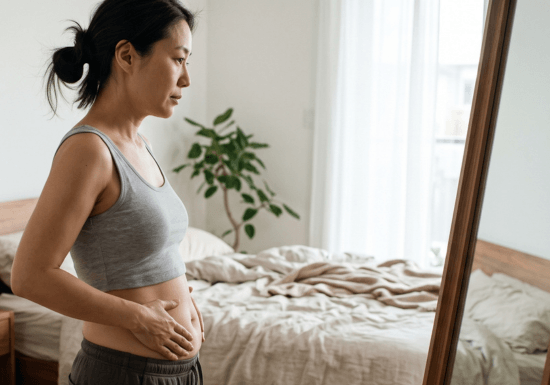

What is loose skin after weight loss?
Collagen and elastin are the two proteins that give skin its firmness and elasticity. When the body gains weight, the skin stretches to make room for the extra volume. If it's stretched too much, or for a long time, the collagen and elastin that hold it in shape can be damaged, and the skin may not fully return to its original shape once the weight comes off.
Weight loss reduces body mass, but it doesn't tighten the skin. Significant weight loss is one of the main reasons skin ends up loose, because the skin is left with more surface than the body now needs.
Loose skin tends to fall into two broad patterns:
- Mild to moderate laxity: skin feels softer or looser than before, with some crepiness or a slight drop, but no heavy hanging. This is the pattern that non-surgical options are generally considered for.
- Significant excess skin: skin hangs or folds noticeably, often after major weight loss. This usually calls for a conversation about surgical options, as non-surgical treatments don't remove skin.
The areas most often affected include the abdomen, upper arms, thighs, knees, and the neck and jawline.
What causes or contributes to loose skin after weight loss?
- Amount of weight lost: the more the body changes in size, the more skin may be left behind.
- Speed of weight loss: skin has less time to adjust when weight comes off quickly.
- How long the weight was carried: skin that has been stretched for longer may have less ability to recover.
- Pregnancy: the belly skin stretches during pregnancy and may not fully return to its earlier shape afterward.
- Loss of muscle along with fat: lost body mass can include muscle as well as fat, which can make the skin look looser and the contour less defined.
- Age: collagen and elastin naturally decline over time, so skin recovers less readily as we get older.
- Sun exposure: repeated sun exposure over the years can further weaken the collagen and elastin that keep skin firm.
How to tell if it’s worth getting looked at
Ask yourself:
- Has your weight been stable for a while, and does the skin still feel loose?
- Does the loose skin affect what you wear or what you avoid?
- Does skin that folds or rubs cause irritation or discomfort?
A yes to any of these is worth raising with a doctor.
What Can Help
At Cutis Medical Laser Clinics, we take a doctor-led approach to loose skin. We start with an assessment of the area, how much laxity is present, how long your weight has been stable, and what you would like to change. This helps us work out whether a non-surgical approach is a reasonable option for you, and which one.
Medical (doctor-led)
- Doctor-Led RF Skin Tightening: a monopolar radiofrequency treatment that heats existing collagen fibers and helps with collagen formation. Improvement is gradual, and can be used on the face, eye area, abdomen, arms, thighs, and buttocks. It is considered for mild to moderate laxity and is not recommended for severe sagging.
- Monopolar RF: delivers radiofrequency heat into the deeper layer of the skin, while the surface is kept cool. The heat encourages collagen remodeling, and the skin continues to firm up gradually over the following two to three months. It can be used on areas including the neck, arms, tummy, and thighs.
Aesthetic
- Exilis Ultra 360: combines radiofrequency with ultrasound to heat the deeper layers of the skin and stimulate collagen. A larger applicator is used for body areas such as the belly, arms, and thighs. It is usually done as a course of sessions, and most people feel it as warmth, similar to a hot stone massage.
- NIR Cinderella: uses pulsed near-infrared light to heat the deeper layers. It causes collagen fibers to tighten, stimulating the skin to build new collagen. It can be used on the abdomen, upper arms, and thighs, and is suited to mild to moderate laxity. Treatments typically take 30 to 40 minutes, and may require several sessions.
- ThermoSculpt: combines deep tissue heating with gentle muscle contractions to support muscle tone and skin elasticity. It is used on areas such as the abdomen, inner arms, thighs, and knees. ThermoSculpt is not a weight loss treatment, and it works best alongside a regular balanced diet and exercise.
Some people are advised to combine treatments. Your doctor will recommend a plan based on your skin and the areas you want to address.
Skincare and lifestyle
- Eat enough protein and vitamin C-rich foods (such as citrus, kiwi, and peppers) as part of a balanced diet. These provide nutrients the body uses to make collagen.
- Drink enough water throughout the day, especially in Singapore’s heat.
- Add resistance training to build muscle under the skin. This can improve contour and definition, but it doesn’t tighten stretched skin on its own.
- If you are still losing weight, a gradual pace gives the skin more time to adjust.
- Wear a broad-spectrum sunscreen of SPF 30 or higher daily, including when you exercise outdoors, to protect the collagen you have.
- Moisturize regularly. Creams and serums may make skin feel smoother or slightly firmer for a short time, but they can’t rebuild lost collagen and elastin.
What to Expect
These treatments work gradually. Some people notice a slightly firmer look soon after a session, but most of the change builds over weeks to months as the skin makes new collagen. The number of sessions varies by treatment and by person.
Results depend on your skin quality, how much laxity there is, how stable your weight is, and your lifestyle. Non-surgical treatments can’t remove excess skin and don’t replace surgery for significant laxity.
Downtime is described as minimal. Most people feel warmth during treatment, and the devices have built-in cooling for comfort. Mild redness or a feeling of warmth is possible and usually settles within a few hours to a day.
After treatments, it is advised to avoid saunas, steam rooms, and exercise for 24 hours. Collagen continues to decline with age, so maintenance sessions may be discussed over time.
When Treatment Isn’t the Answer
Non-invasive treatments are not suited to every situation. A conversation about surgery may be more appropriate if you have:
- Significant hanging skin or folds, particularly after major weight loss
- Heavy fat deposits or severe sagging, for which energy-based treatments are not recommended
Certain medical conditions, implanted devices, or active skin conditions may also call for a different approach. If your weight is still changing, your doctor may also discuss when to begin treatment.
Weight loss that was unintentional, or that comes with other symptoms, should be checked by a doctor first. It can point to an underlying medical condition that needs attention.
FAQs
Will loose skin tighten up on its own?
It depends. Skin that was stretched only slightly may settle over time. Skin that was stretched a lot, or for a long time, may not fully recover, and weight loss alone doesn’t tighten it.
If it has been several months since your weight stabilized and you still feel the looseness, a consultation can help you understand your options.
Can exercise tighten loose skin?
Exercise, especially resistance training, builds muscle and can improve the shape under the skin. But it doesn’t tighten stretched skin by itself.
Do creams and serums work for loose skin?
They may leave skin feeling smoother or slightly firmer for a short time, but the effect is subtle. Loose skin is linked to declining collagen and elastin, which topical products cannot rebuild.
Is non-surgical treatment an alternative to surgery?
Not an equivalent one. Non-surgical treatments are generally considered for mild to moderate laxity and work gradually by stimulating collagen. They don’t remove excess skin, so significant or severe laxity may need an assessment for surgery.
How long do results last?
This varies by treatment and by person. Because collagen declines naturally with age, maintenance sessions may be recommended. Your doctor can advise on a schedule based on how you respond.
The information on this page is intended for educational purposes and does not replace a proper diagnosis. Every case is different, so the right next step is a consultation with our medical team.
Related Body Concerns
Ready to find out what’s behind your body concern?
Book a personalized consultation with us to talk through what you’re noticing and explore the treatment options that suit your body and your goals. WhatsApp us at +65 9780 2079 to book a consultation at Cutis Medical Laser Clinics in Singapore.

