

3 Key Takeaways
- Intimate hyperpigmentation is common and can be due to hormones, friction, aging, and hair removal practices. It is not a hygiene issue.
- Most DIY remedies and over-the-counter products are not designed for intimate skin. The skin in this area is more sensitive, and using such products can cause irritation, inflammation, and further darkening.
- Dermamelan Intimate is a clinically developed depigmentation treatment that works on both the pigmentation itself and the underlying process causing it.
Intimate Hyperpigmentation: Why It Happens, What the Myths Get Wrong, and What Can Actually Help
While the darkening of the intimate areas is fairly common, many assume that discoloration means something is wrong with their body, health, or hygiene. In reality, however, intimate hyperpigmentation is an extremely common (but least discussed) skin concern that affects all skin tones, ages, and even genders.
Our aesthetic clinic in Singapore explores what intimate hyperpigmentation actually is, the most common misconceptions, as well as what causes it. And for those who want to address it, we also share what the professional, medical solutions look like, including Dermamelan intimate in Singapore.
What is Intimate Hyperpigmentation?
Intimate hyperpigmentation refers to the darkening or discoloration of the skin in and around the genital area, including the:
- Inner thighs (along the upper, inner leg where thighs meet)
- Vulva (external female genitalia, including the labia majora and minora)
- Perianal zone (the skin surrounding the anus)
- Mons pubis (the soft tissue above the pubic bone)
- Groin (the fold where the lower abdomen meets the upper thigh on each side)
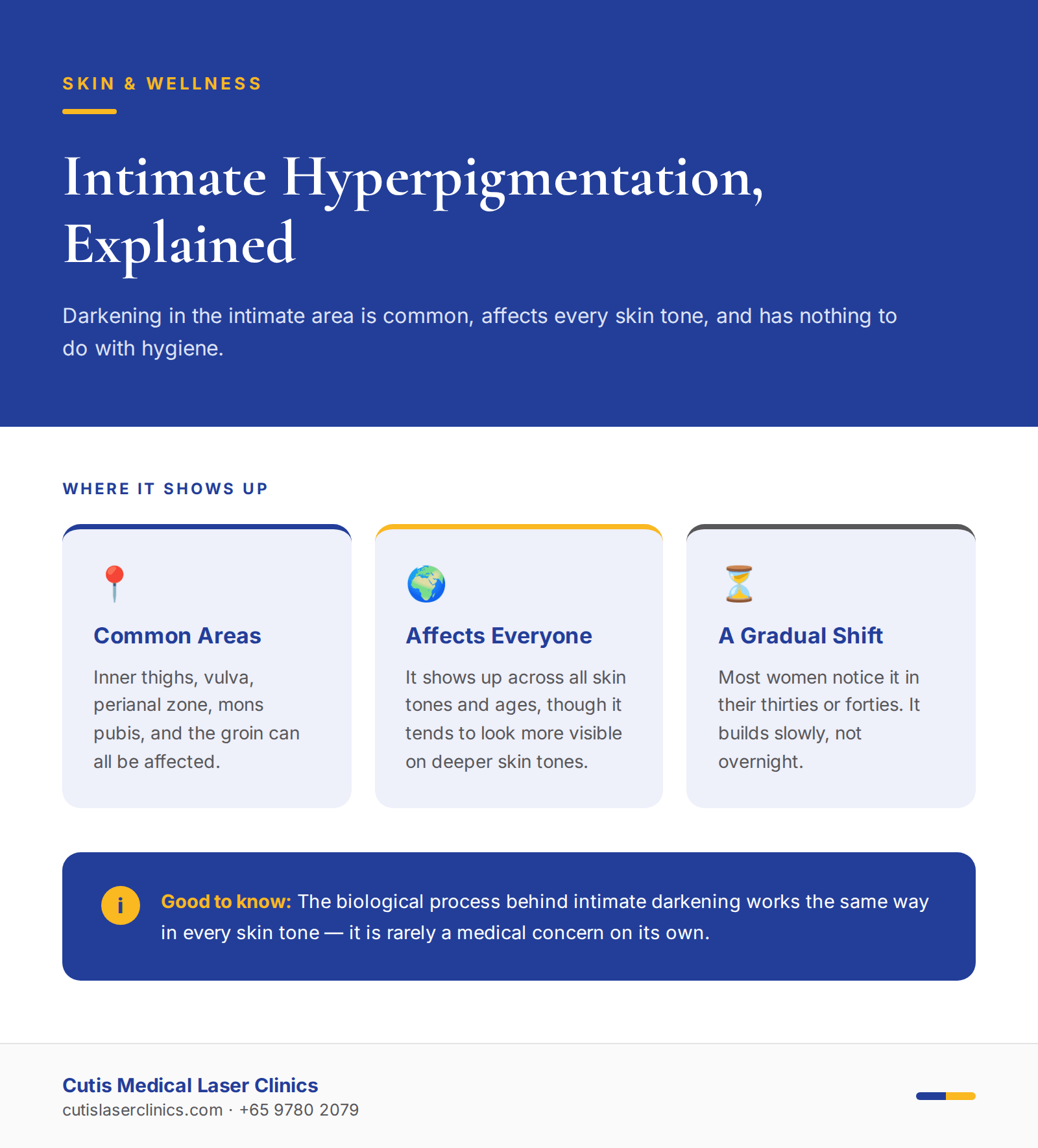
Fast facts about intimate hyperpigmentation
- Genetics partly determines pigmentation in the intimate area, alongside physiological and mechanical factors.
- Natural skin tone affects how visible the darkening looks. The contrast tends to be more pronounced on deeper skin tones and subtler on lighter ones.
- The biological process works the same way across all skin colors.
- Most women notice the change in their thirties or forties. The shift is gradual, not sudden.
- Hormonal changes, friction, repeated hair removal, and aging all contribute over time, often without a single trigger.
- Intimate hyperpigmentation is rarely a medical concern. For most women, it is a normal part of how skin in this area changes with age.
What Causes Intimate Hyperpigmentation
The intimate area deals with different conditions at the same time: friction, lack of ventilation, hormonal shifts, and hair removal. Any one of these can stimulate melanin production, and in most women, several are happening at once.
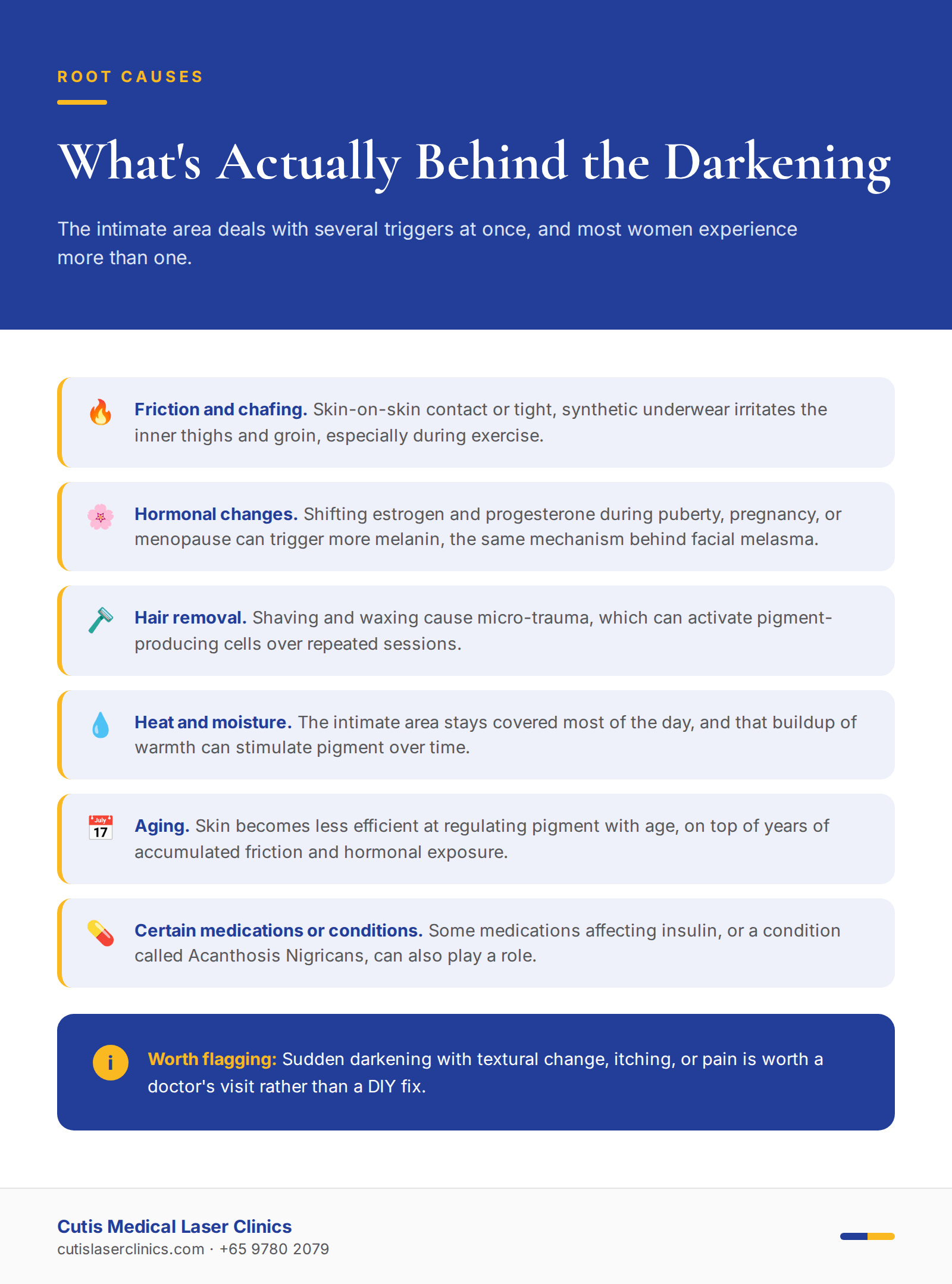
Friction and chafing
Repeated skin-on-skin contact or friction from ill-fitting or synthetic underwear is a common contributor. The inner thighs and groin are particularly prone to this, especially in warm weather or during certain activities such as running, working out, and even walking.
Hormonal changes
Fluctuations in estrogen and progesterone can trigger increased melanin production in the genital area. This can happen during puberty, pregnancy, menopause, or with oral contraceptives. This is the same mechanism that causes melasma on the face during pregnancy.
Hair removal methods
Both shaving and waxing cause micro-trauma to the skin. This can lead to inflammation that activates melanocytes (pigment-producing cells), resulting in post-inflammatory hyperpigmentation (PIH). Frequent hair removal means this process repeats regularly.
Lack of ventilation and moisture buildup
The intimate area is typically covered throughout the day and prone to accumulating heat and moisture. This environment can stimulate melanin production over time and even worsen existing discoloration.
Aging
As skin ages, it is less efficient at regulating pigment production. Years of accumulated friction, hormonal exposure, and minor trauma can cause your genital area to darken. Skin pigmentation in other areas of the body is also common with aging.
Certain medications and conditions
Some medications that affect insulin levels can cause darkening in body folds and the groin. A condition called Acanthosis Nigricans, characterized by darkened, thickened skin in body folds, can also affect this area. If the darkening is sudden or accompanied by textural changes, it is worth seeing a doctor.
For further reading:Debunking 7 Myths About Dark Inner Thighs
3 Myths About Intimate Darkening
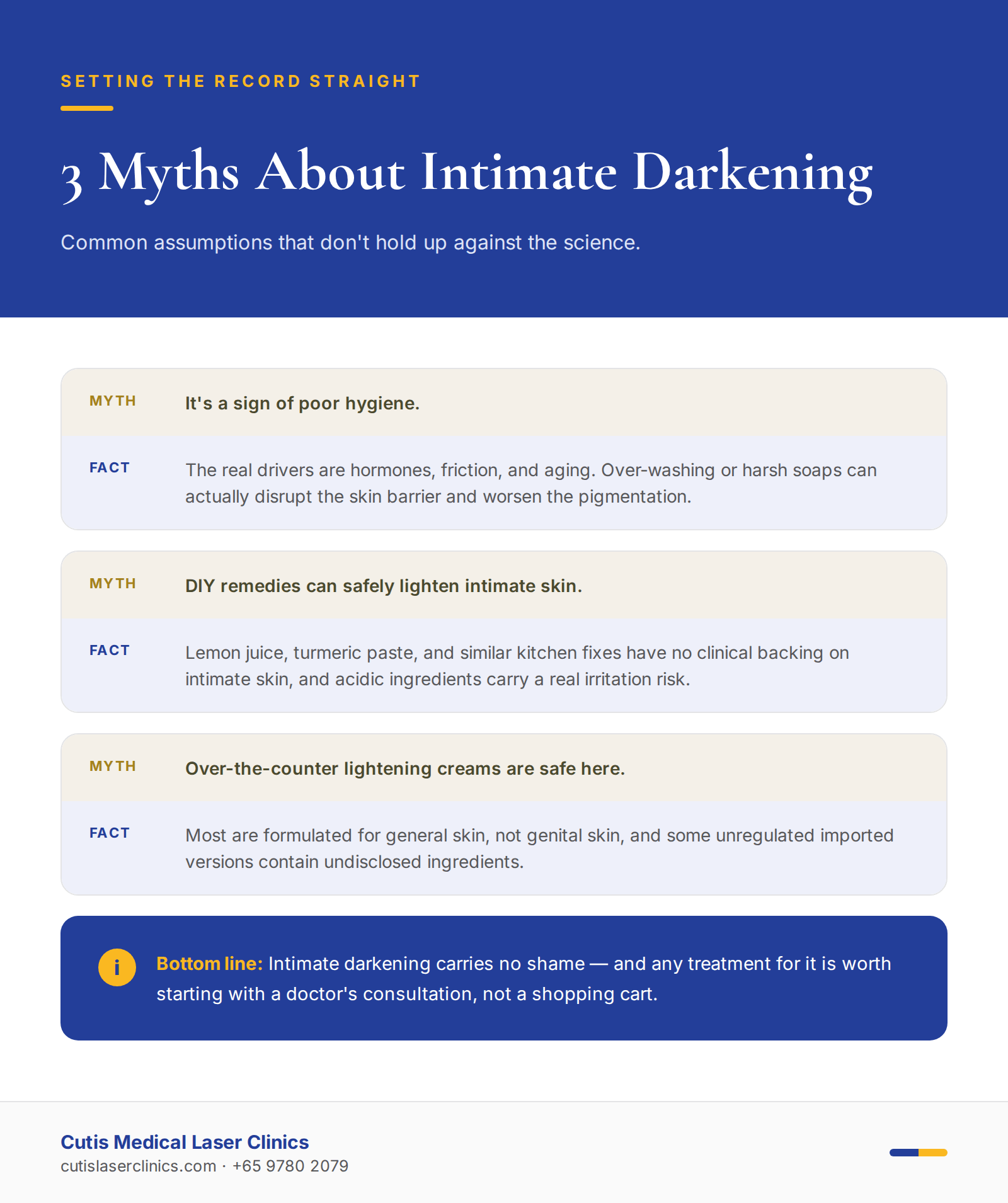
- Vaginal darkening is a sign of poor hygiene
Not true. The main contributors of intimate hyperpigmentation (hormonal shifts, friction, and aging) have nothing to do with hygiene or cleanliness. This misconception only attaches shame to a normal, physiological process.
It is important to note that over-washing or using harsh soaps in an attempt to lighten the discoloration can actually disrupt the skin barrier in this area. This can then trigger further inflammation and potentially worsen the pigmentation.
- Home and DIY remedies can safely and effectively lighten intimate skin
False. The Internet is never short of suggestions: lemon juice, turmeric paste, coconut oil, potato slices, yogurt. None of these, however, have clinical evidence supporting their use and safety on intimate skin.
In addition, particularly acidic ingredients like lemon juice carry a real risk of irritation and inflammation on skin that is thin and sensitive. It is worth noting that PIH from an irritation reaction can be harder to address than the original discoloration.
- Over-the-counter lightening creams are safe for the intimate skin.
Not accurate. Many products marketed as intimate bleaching creams are formulated for general skin use and are not designed for the genital area. Some even contain concentrations of active ingredients that carry a higher risk of irritation or burning.
Unregulated imported products sold online may also contain undisclosed and potentially harmful ingredients. It is best to see a doctor instead of reaching for an online product to protect both safety and outcome.
Note: Intimate darkening is a normal concern for most women. However, if it’s affecting your confidence, there are clinical or medical-grade options that are actually designed for this delicate area. It starts with a consultation, not adding products to your shopping cart.
For further reading: Things to Keep in Mind When Considering Intimate Lightening
Medical-Aesthetic Treatment: Dermamelan Intimate
If you’re looking to address intimate hyperpigmentation, Dermamelan Intimate is worth considering. It is a professional, medical depigmenting solution specifically formulated for the genital and surrounding areas. Developed in collaboration with gynecologists, it is suitable for all skin types and tones.
How it works
The solution features a dual mechanism: it works on the visible pigmentation, and it also acts on the underlying process or the overproduction of melanin by melanocyte cells. This helps prevent the darkening from returning.
The Two-Phase Protocol:
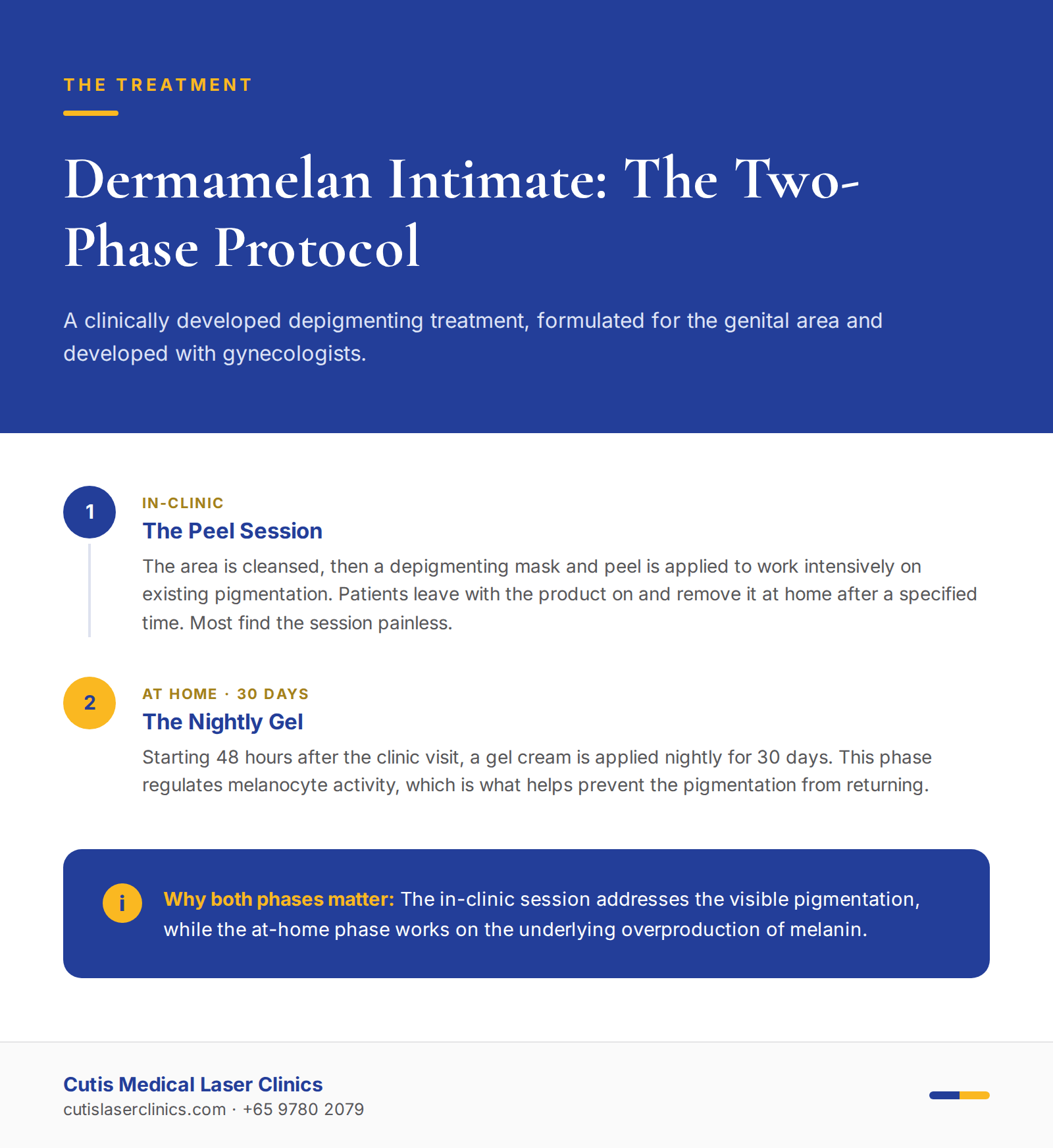
Phase One · In-Clinic
The first phase takes place at a clinic under the supervision of a doctor or professional. Here is what the session involves:
- Cleansing of the area to prepare the skin
- Application of a depigmenting mask and peel to deliver intensive action on existing hyperpigmentation
- After the session, the patient leaves with the product on
- Product removal at home after a specified time
Most patients find the treatment painless and return to normal daily activities in the days following, as long as they follow the aftercare guidelines.
Phase Two · At Home
The home phase begins 48 hours after the in-clinic session. Here is what it involves:
- Application of the Dermamelan intimate gel cream to the treated area every night
- The nightly application goes on for 30 days, following the doctor’s instructions
- Apart from maintaining the result, the gel regulates melanocyte activity to prevent pigmentation from returning
- It also supports overall skin quality in the intimate area over time
The home phase is what gives the treatment its long-term regulatory effect, and following it consistently is what separates a temporary result from a lasting one.
Treatment Areas
- Genital-perineal area
- Perianal zone
- Mons pubis
- Inner thighs
- Groin
Results Timeline
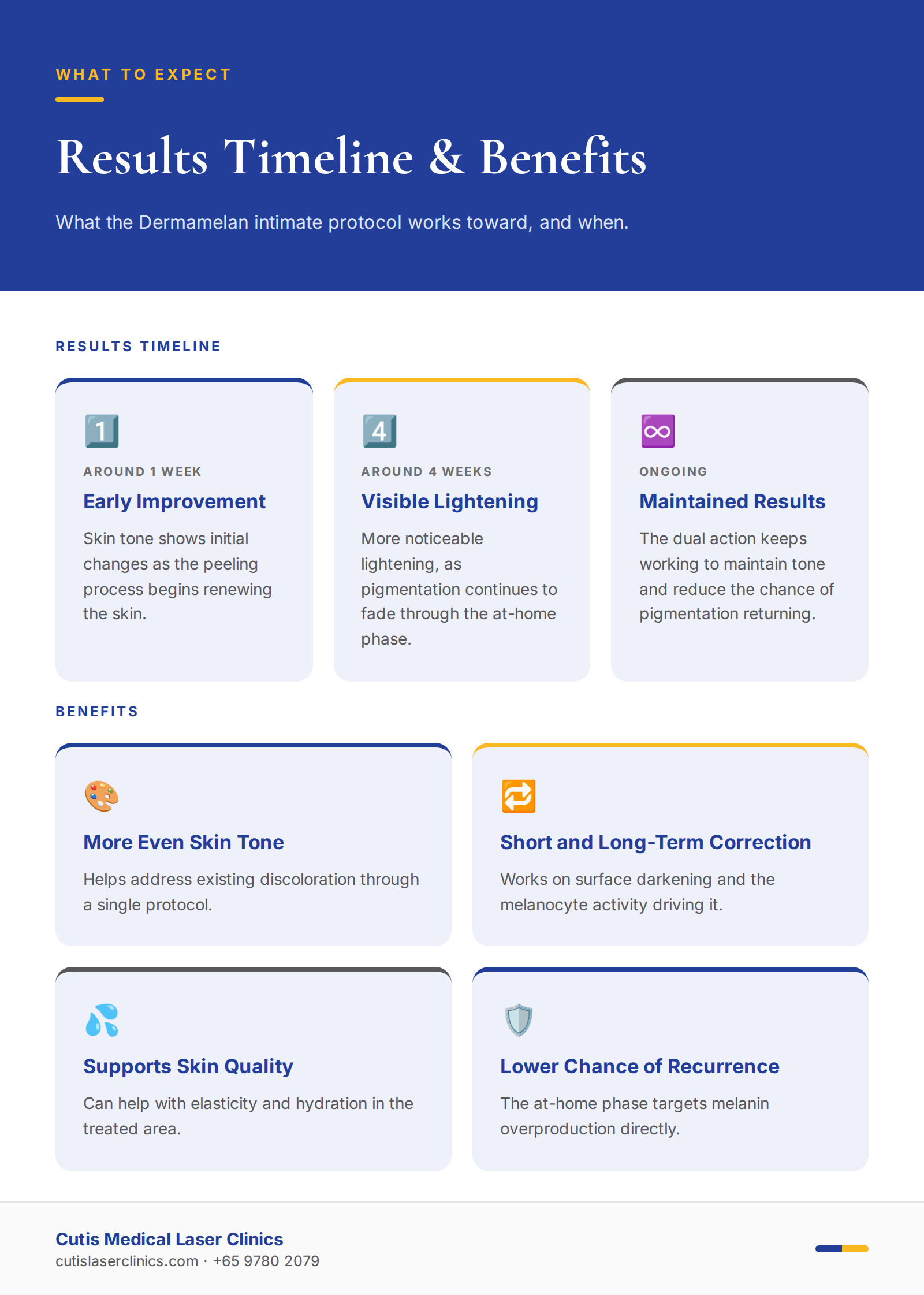
- Around one week: You may notice some initial improvements in skin tone. This happens as the skin begins to renew and the peeling process takes effect.
- Around four weeks: More significant lightening of the treated areas, with pigmentation continuing to fade as the at-home phase progresses.
- Ongoing: The dual action works to maintain results and reduce the likelihood of the darkening returning. This is particularly true with consistent following of the at-home protocol.
Benefits of Dermamelan Intimate
- Unified, more even skin tone – helps address existing discoloration in a single session protocol.
- Short and long-term pigmentation correction – works not only on the surface darkening, but also the melanocyte activity driving it.
- Improved skin elasticity and hydration – supports overall skin quality and water retention in the treated area.
- Reduced likelihood of recurrence – the at-home phase targets melanin overproduction, making reappearance less likely.
What to Expect During and After Treatment
- During the in-clinic phase, it is normal for the treated area to feel warm and appear red. This typically settles within 24 to 48 hours.
- During the at-home phase, mild peeling is expected as the skin renews and the area may feel sensitive at times.
- Applying the products as directed will help manage these effects.
When to See a Doctor First
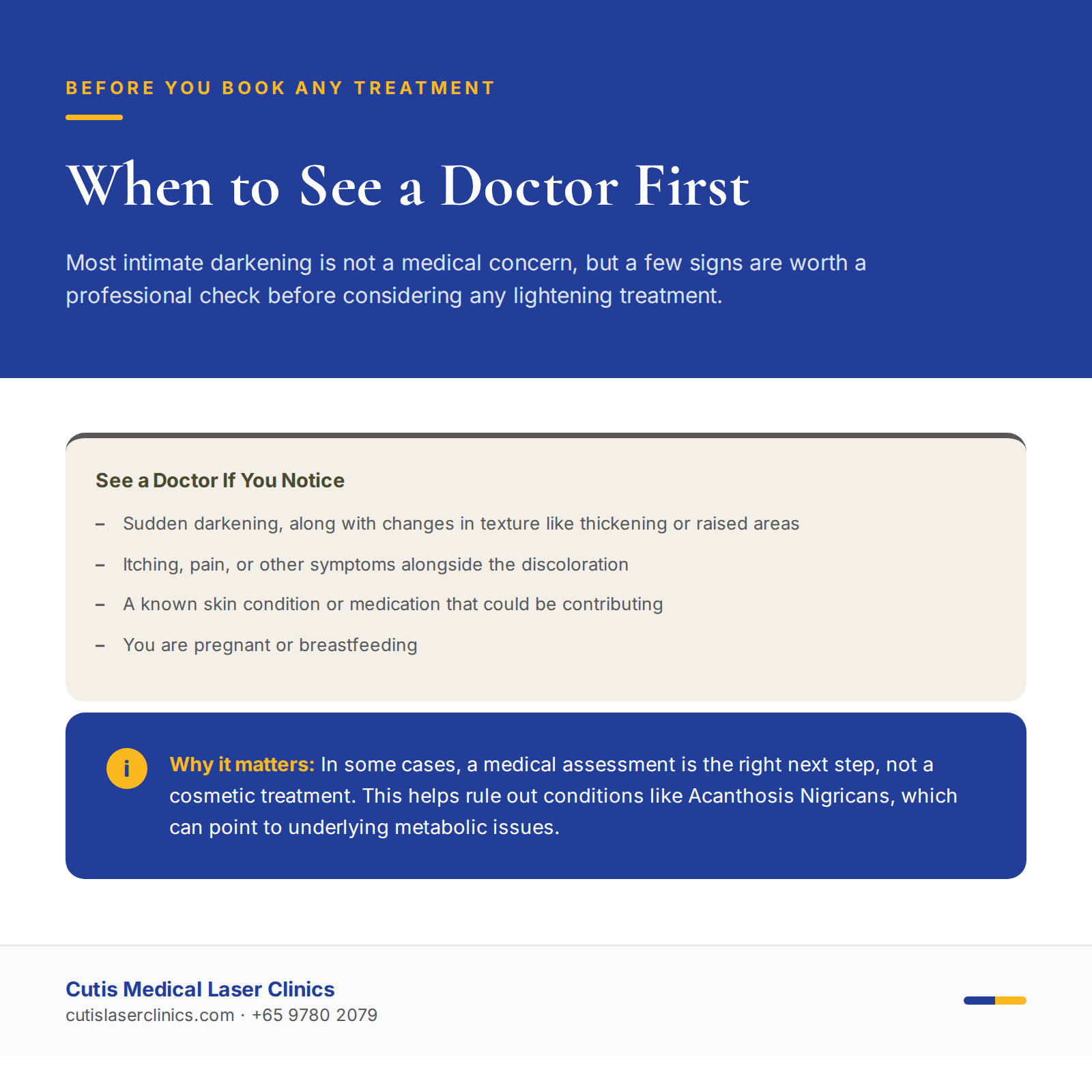
Before considering any lightening treatment, see a doctor if:
- The darkening is sudden with changes in texture, like thickening or raised areas
- There is some itching, pain, or other symptoms alongside the discoloration
- You have a known skin condition or medication that may be contributing to the darkening
- You are pregnant or breastfeeding
In some cases, a medical assessment is the recommended route, not necessarily a cosmetic treatment.
Frequently Asked Questions
Does intimate hyperpigmentation mean something is wrong medically?
In most cases, no. However, if other symptoms like pain or skin thickening come with it, it is worth seeing a doctor. This is to rule out conditions like Acanthosis Nigricans, which can indicate underlying metabolic issues.
Can shaving or waxing cause darkening?
Yes, both can contribute to darkening. Repeated hair removal creates micro-trauma in the skin. The skin responds to this inflammation by producing more melanin, resulting in PIH.
It does not mean you need to stop hair removal, but it does explain why some darkening develops even without any other obvious cause. Other hair removal methods like IPL or laser hair reduction avoid repeated skin trauma.
How many sessions of Dermamelan intimate do I need?
The protocol is designed as a single in-clinic session combined with an at-home phase. Whether you need follow-up or maintenance is something your doctor will advise on at consultation. This will depend on the degree or severity of pigmentation and your response to the first treatment.
Is there any downtime with Dermamelan intimate?
There is some redness and warmth in the first 24 to 48 hours. Mild peeling during the at-home phase is a normal part of the skin renewal process. Activity restrictions and aftercare specifics will be discussed by your doctor before treatment.
Is Dermamelan intimate suitable for all skin types?
Yes. The formulation is designed to work across all skin types and tones. It is developed specifically for the intimate area, which has different characteristics from facial or body skin.
Can the darkening come back after treatment?
The factors that contributed to the darkening (friction, hormones, grooming) do not disappear after treatment. The at-home phase is designed specifically to suppress melanocyte overactivity and reduce the likelihood of the pigmentation returning.
Following the full protocol and addressing triggering factors where possible gives the best long-term outcome.
Schedule a consultation today
From a medical standpoint, intimate hyperpigmentation does not require treatment. Whether or not you want to address it is entirely a personal decision. If the discoloration is affecting your confidence and you would like to explore options, we are here to help you understand them clearly.
Contact Cutis Medical Laser Clinics in Singapore and book a consultation with our aesthetic doctor to find out how we can help.
- If you would like to be an informed patient, please contact us at +65-6801-4000 or
hello@cutislaserclinics.com. - Cutis Medical Laser Clinics, 9 Scotts Road Pacific Plaza, Scotts Medical Center #08-07, Singapore – 228210
+65-6801-4000 - hello@cutislaserclinics.com


