

3 Takeaways
- Widespread facial redness. Diffuse redness is a persistent, even flush across the cheeks, nose, chin, or forehead. It is linked to dilated or damaged blood vessels and is different from the bumps and pustules seen in some other skin conditions.
- Several possible causes. It can be due to rosacea, thin or sensitive skin, sun exposure, temperature extremes, harsh skincare products, or hormonal changes. It is usually harmless medically, even if cosmetically bothersome.
- Manageable with the right approach. Identifying your triggers alongside a suitable in-clinic treatment, such as Laser Skin Rejuvenation, can help calm visible redness and even out skin tone over time.
Diffuse Redness: What It Is, What Causes It, and How to Treat It
Do your nose, cheeks, or forehead often look flushed or reddish, even when you’re not exercising or out in the sun? If so, you may be dealing with diffuse redness. While it is common and not harmful on its own, it doesn’t usually respond to typical skincare and can be difficult to manage.
Continue reading as our aesthetic clinic in Singapore explores what diffuse redness actually is, what tends to cause it, and how facial redness laser treatments like Laser Skin Rejuvenation can help improve it.
What is Diffuse Redness?
Diffuse redness refers to a persistent, even reddish discoloration of the skin, without spots, bumps, or active inflammation. It typically shows up on the cheeks, nose, chin, and forehead. It can give the skin an uneven or sensitive appearance.
Diffuse redness is usually linked to blood vessels beneath the skin’s surface that have become dilated or damaged. In some cases, it may be accompanied by visible tiny blood vessels (sometimes called couperose), or a warm or mildly burning sensation in the affected area.
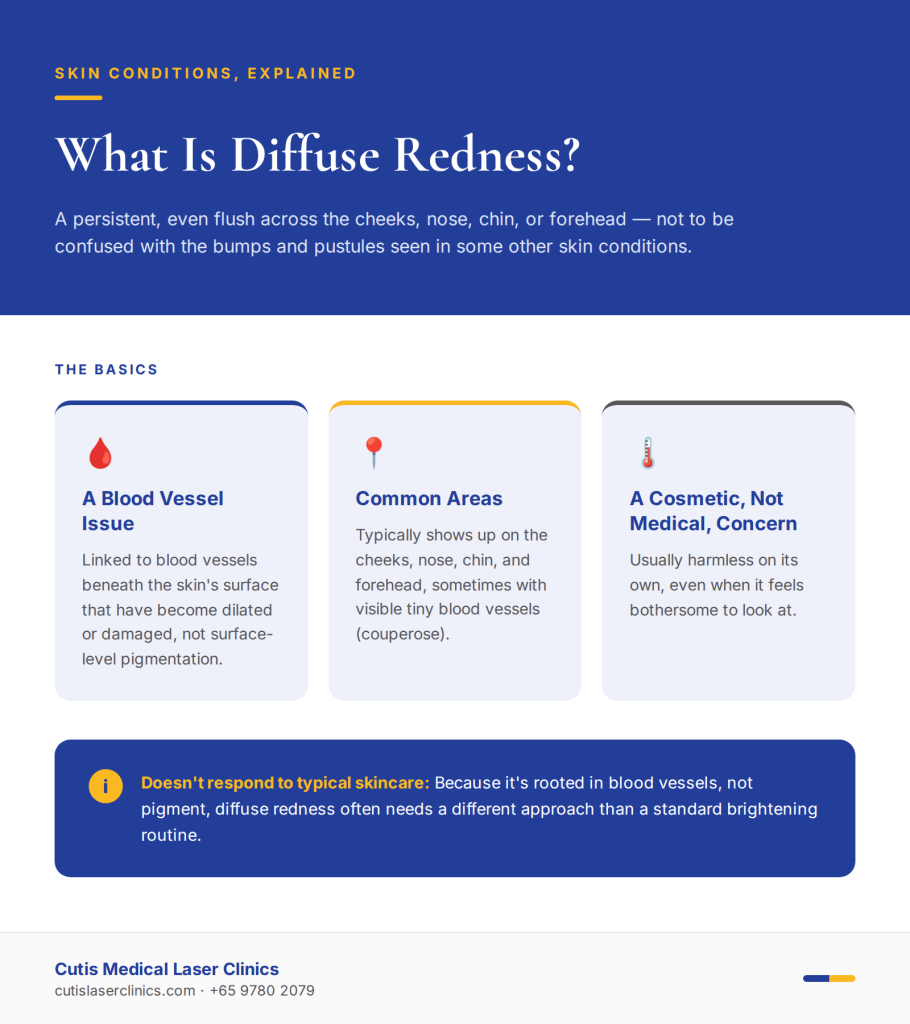
Many people find it cosmetically concerning, particularly when it makes the skin look flushed or uneven. And as the underlying cause varies from person to person, a consultation with a doctor is important.
For further reading: Facial Flushing: Is it Just Normal Redness or Rosacea?
What Causes Diffuse Redness?
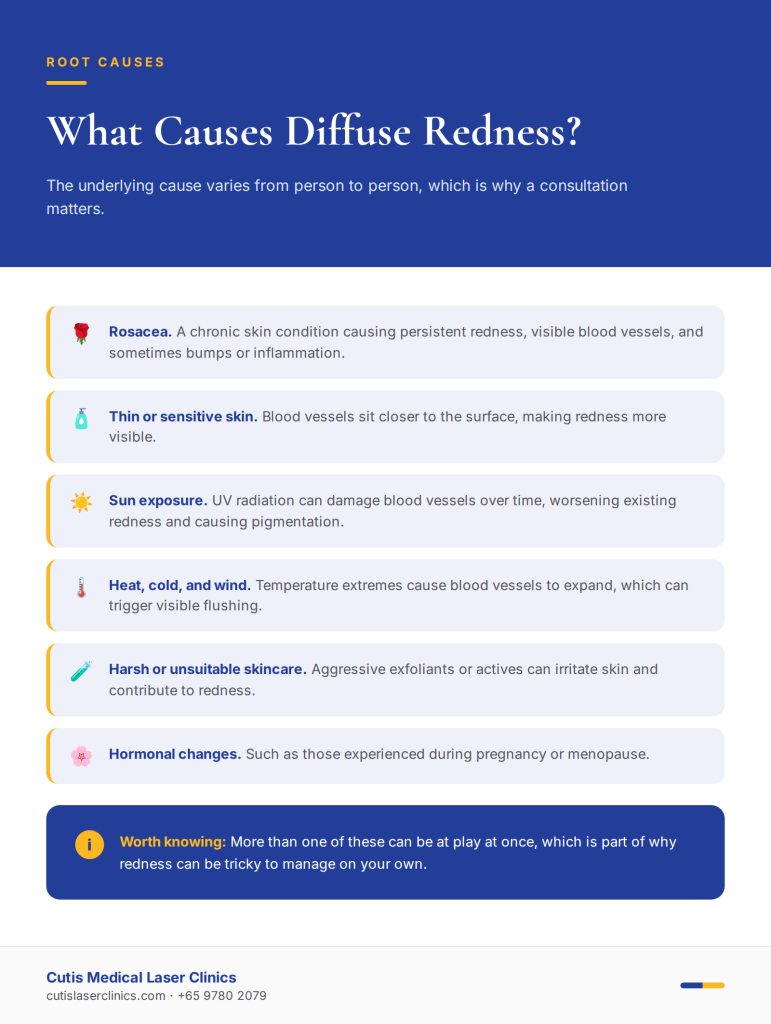
Diffuse redness can develop for a number of reasons, which can include:
- Rosacea – a chronic skin condition that causes persistent redness, visible blood vessels, and sometimes bumps or inflammation.
- Thin or sensitive skin – with this, blood vessels sit closer to the skin’s surface, causing redness to become more visible.
- Sun exposure – UV radiation can damage blood vessels over time and worsen existing redness, as well as cause pigmentation.
- Heat, cold, and wind – temperature extremes can cause blood vessels to expand, which can trigger visible flushing.
- Harsh or unsuitable skincare products – aggressive exfoliants or actives can irritate the skin and contribute to redness.
- Hormonal changes – such as those experienced during pregnancy or menopause.
Diffuse Redness vs. Rosacea
While diffuse redness and rosacea are closely related, they are not the same thing. Diffuse redness describes the visible pattern: a persistent, even redness without spots or active inflammation. Rosacea, meanwhile, is a chronic skin condition that can cause diffuse redness, but often comes with other symptoms like visible blood vessels, bumps, or pustules.
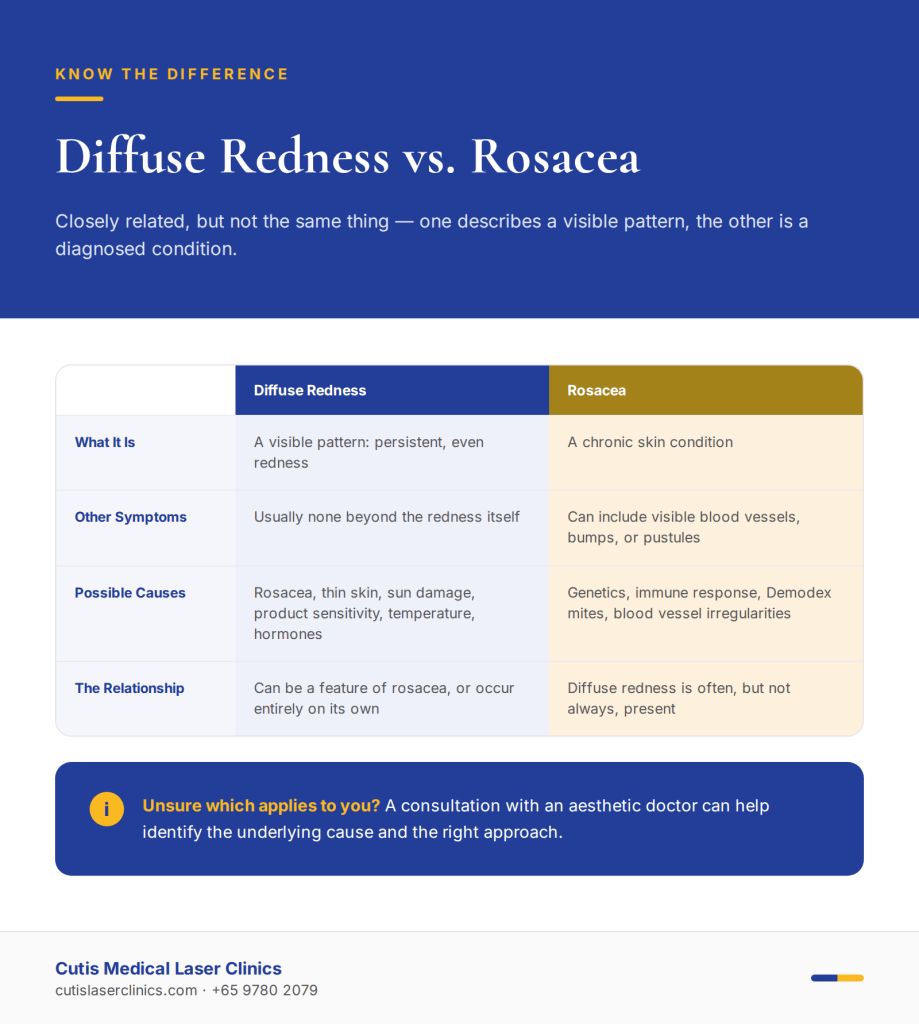
Diffuse redness can be a feature of rosacea, but it can also occur on its own due to other causes (sun damage, thin skin, or product sensitivity). If you’re unsure which applies to you, a consultation with an aesthetic doctor can help identify the underlying cause and the right approach.
For further reading: Rosacea 101: Understanding Triggers, Symptoms, and Treatments in Singapore
How to Manage Diffuse Redness
Instead of just surface-level pigmentation, diffuse redness is generally caused by underlying blood vessels. This is why managing it starts with two things:
- Identifying and limiting exposure to triggers
- Considering an in-clinic laser treatment for facial redness that targets the blood vessels
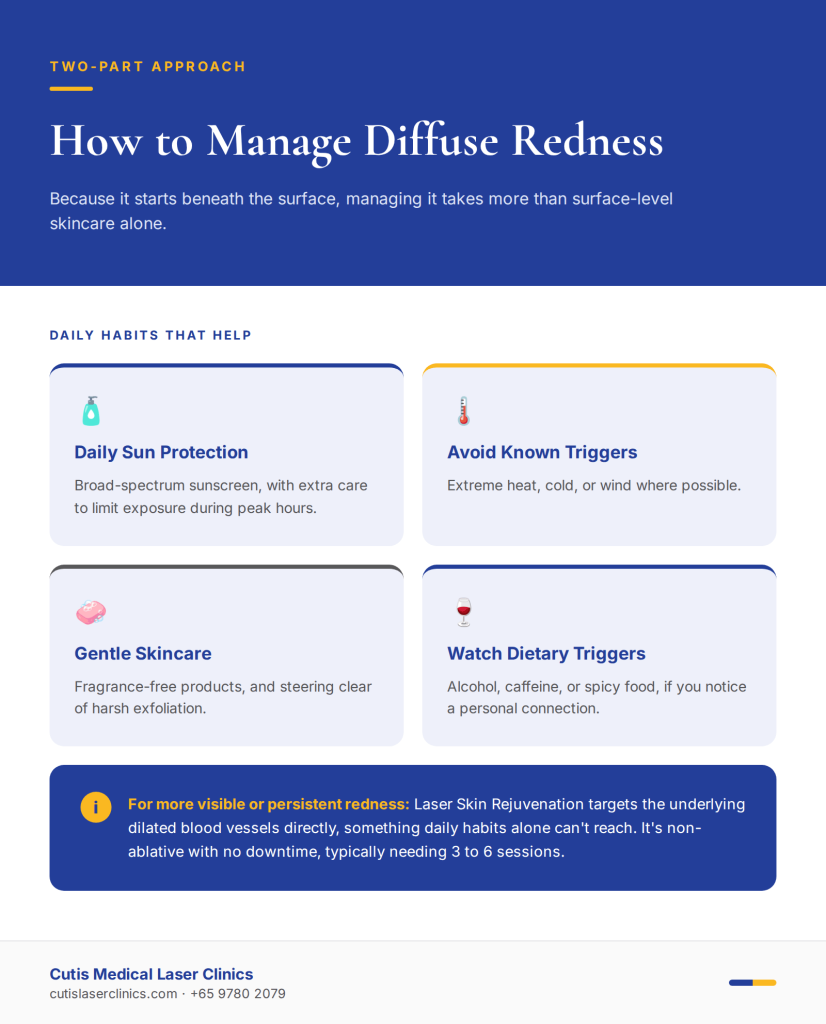
Daily habits that can help include:
- Wearing broad-spectrum sunscreen daily and limiting sun exposure, especially during peak hours
- Avoiding known triggers such as extreme heat, cold, or wind where possible
- Choosing gentle, fragrance-free skincare products and avoiding harsh exfoliation
- Being mindful of dietary triggers like alcohol, caffeine, or spicy food if you notice a connection
How Laser Skin Rejuvenation Can Help
For more visible or persistent facial redness, Laser Skin Rejuvenation is worth considering. This near-infrared (NIR) Nd:YAG laser works by gently heating the skin’s upper dermis, which generates additional heat in dilated capillaries (the blood vessels responsible for redness).
Laser Skin Rejuvenation can help reduce the appearance of redness and support a more even-looking skin tone over a course of sessions. It can improve:
- Sun damage
- Pigmentation
- Fine lines and wrinkles
- Scarring
- Redness
- Enlarged pores
- Uneven skin texture
Since the treatment is non-ablative and requires no downtime, it fits easily into a regular skincare routine. In addition, its collagen-stimulating effects can help with overall skin texture and tone, as well as redness reduction.
Frequently Asked Questions
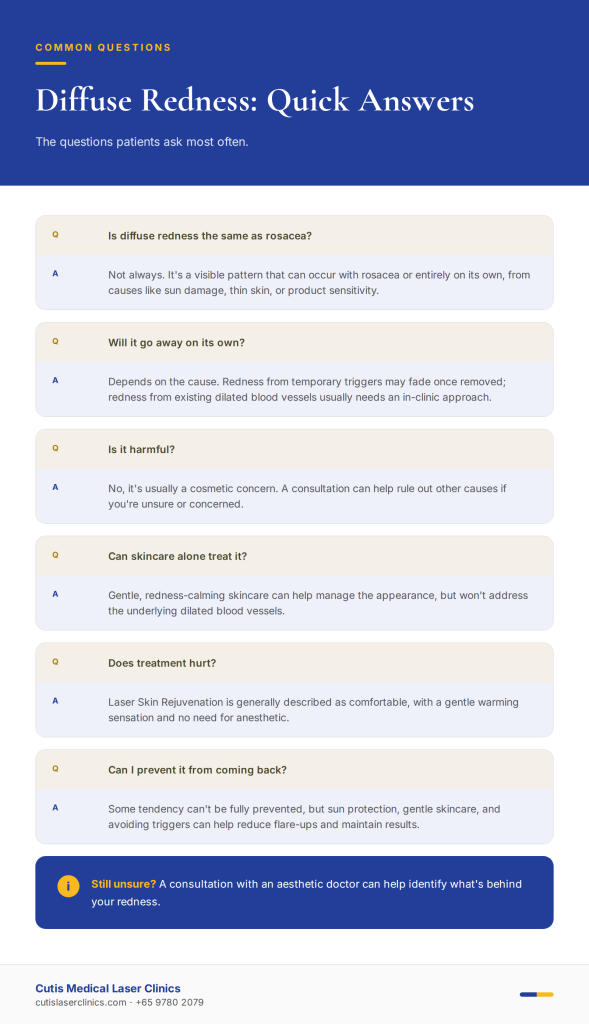
Is diffuse redness the same as rosacea?
Not always. Diffuse redness describes a visible pattern of constant, even redness, which can occur with rosacea or on its own. Common causes include sun damage, thin skin, or product sensitivity.
Will diffuse redness go away on its own?
It depends on what’s causing it. Redness associated with temporary triggers, like heat or a product reaction, may fade once the triggers are removed. Redness due to existing dilated blood vessels usually needs an in-clinic approach or laser treatment.
Is diffuse redness harmful?
No, diffuse redness is usually a cosmetic concern and generally considered harmless. A consultation with an aesthetic doctor, however, can help rule out other causes if you’re unsure or worried about it.
Can skincare products alone treat diffuse redness?
Gentle, redness-calming skincare can help manage the appearance of diffuse redness, but it won’t address the underlying dilated blood vessels. For more noticeable improvement, an in-clinic treatment is usually needed.
How many Laser Skin Rejuvenation sessions will I need for redness?
Most treatment plans involve 3 to 6 sessions spaced a few weeks apart, though this varies depending on the severity of your redness and your skin’s response. Your aesthetic doctor can advise on a plan suited to your skin during a consultation.
Does treatment for diffuse redness hurt?
Laser Skin Rejuvenation is generally described as comfortable, with a gentle warming sensation during treatment and no need for anesthetic.
Can I prevent diffuse redness from coming back?
Some tendency toward diffuse redness, particularly if linked to thin skin or rosacea, cannot be fully prevented. However, sun protection, gentle skincare, and avoiding known triggers can help reduce flare-ups and maintain your results after treatment.
Book a Consultation
If persistent facial redness has been bothering you, you don’t have to just live with it. WhatsApp us at +65 9780 2079 to schedule a consultation with one of our aesthetic doctors. We can help identify what’s behind your redness and recommend a treatment plan suited to your skin.
- If you would like to be an informed patient, please contact us at +65-6801-4000 or
hello@cutislaserclinics.com. - Cutis Medical Laser Clinics, 9 Scotts Road Pacific Plaza, Scotts Medical Center #08-07, Singapore – 228210
+65-6801-4000 - hello@cutislaserclinics.com


